RNA polymerase
Enzyme that synthesizes RNA from a DNA template.

litvinanna · CC BY-SA 4.0
RNA polymerase (RNAP or RNApol), also known as DNA-directed/dependent RNA polymerase (DdRP), is an enzyme that catalyzes the synthesis of RNA from a DNA template strand. It is essential to life, found in all living organisms and many viruses, and is responsible for transcription, the process of copying DNA into RNA.
- field
- Molecular biology
- known_for
- Catalyzing RNA synthesis from DNA; transcription; producing mRNA, tRNA, rRNA, miRNA, and catalytic RNA
- type
- Enzyme (multi-subunit or single-subunit)
Lore & Background
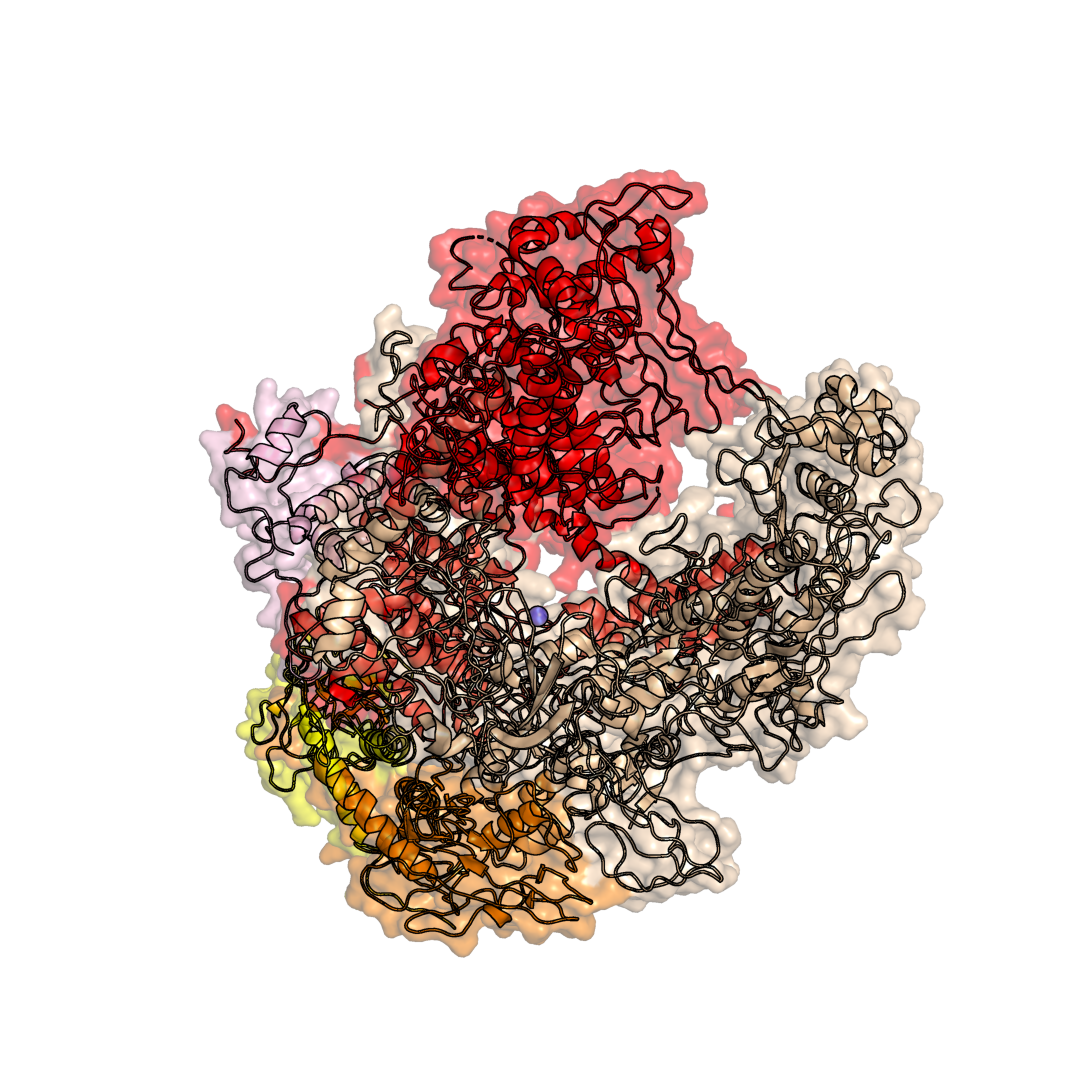
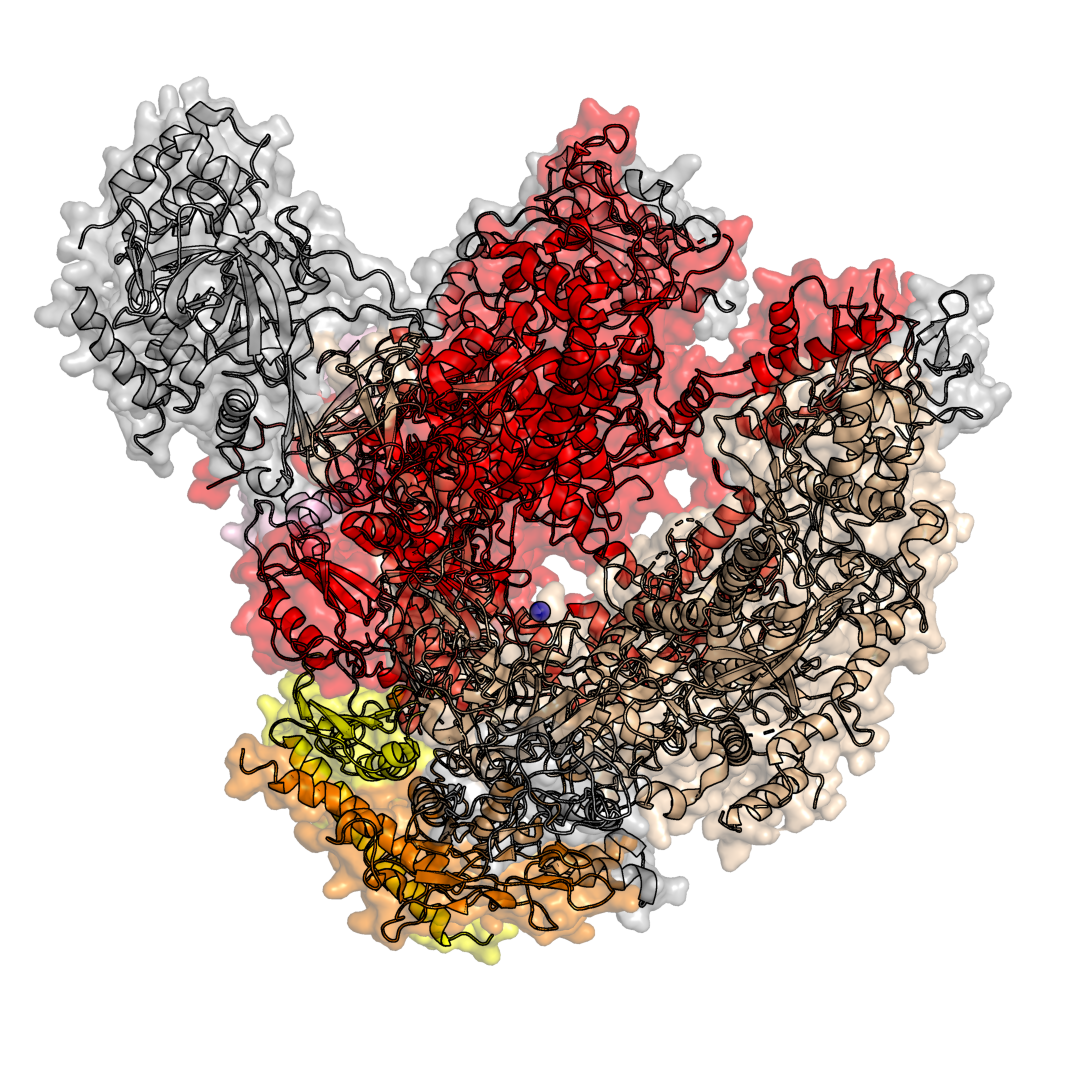
RNA polymerase locally opens double-stranded DNA using its intrinsic helicase-like activity, without requiring a separate helicase, and uses one strand as a template for RNA synthesis. In bacteria, a sigma factor binds to the promoter region to initiate transcription; the mediator complex is specific to eukaryotes and is not involved in bacterial transcription. RNAP not only initiates transcription but also guides nucleotides into position, facilitates attachment and elongation, has intrinsic proofreading and replacement capabilities, and recognizes termination sequences. RNA polymerase can be a multi-subunit complex or a single-subunit enzyme, each representing an independent lineage. Multi-subunit RNAP is found in bacteria, archaea, and eukaryotes, sharing a similar core structure and mechanism. Single-subunit RNAP is found in phages, eukaryotic chloroplasts, and mitochondria, and is related to modern DNA polymerases. Bacteria and archaea have only one RNA polymerase, while eukaryotes have multiple nuclear types, each responsible for a distinct subset of RNA. The core RNA polymerase from E. coli consists of five subunits: two alpha, one beta, one beta prime, and one omega subunit. A sigma factor binds to form the holoenzyme. The core complex forms a 'crab claw' or 'clamp-jaw' structure with an internal channel. Many RNAPs contain metal cofactors, such as zinc and magnesium cations; bacteriophage single-subunit RNA polymerases also contain a tightly bound zinc ion.
Reader's Guide
RNA polymerase is central to gene expression, as it transcribes DNA into various types of RNA, including messenger RNA (mRNA), transfer RNA (tRNA), ribosomal RNA (rRNA), micro RNA (miRNA), and catalytic RNA (ribozyme). Its activity is complex and highly regulated; in E. RNAP initiates transcription at promoter sequences, elongates the RNA chain, and terminates at specific terminators. It accomplishes de novo synthesis and includes helicase activity, unlike DNA polymerase. The process involves initiation, promoter escape, and elongation, with abortive initiation occurring before successful promoter escape. Kornberg for creating detailed molecular images of RNA polymerase during various stages of transcription. Understanding RNAP is fundamental to molecular biology, as it controls patterns of gene expression, allowing cells to adapt, perform specialized roles, and maintain basic metabolic processes.
Did You Know?
- RNA polymerase can produce messenger RNA, transfer RNA, ribosomal RNA, micro RNA, and catalytic RNA.
- RNA polymerase includes helicase activity, so no separate enzyme is needed to unwind DNA.
- Many RNA polymerases contain metal cofactors, such as zinc and magnesium cations; bacteriophage single-subunit RNA polymerases also contain a tightly bound zinc ion.
Architecture of the Core Enzyme
The physical architecture of RNA polymerase is one of molecular biology's most elegant designs. In the well-studied bacterium E. coli, the core enzyme assembles from five distinct subunits: a pair of alpha subunits at 36 kilodaltons each, a beta subunit weighing 150 kilodaltons, a beta prime subunit at 155 kilodaltons, and a small omega subunit. Together these components fold into what researchers describe as a "crab claw" or "clamp-jaw" configuration, with a continuous internal channel running the full length of the structure. This channel is where the DNA template threads through during transcription. The enzyme also depends on metal cofactors—specifically zinc and magnesium cations—that participate directly in the chemistry of nucleotide addition. A sigma factor docks onto this core to form the complete holoenzyme, guiding it to the correct starting position on DNA. Once transcription is underway, the sigma factor detaches, and the bare core carries on elongation independently. Eukaryotic and archaeal versions share this fundamental core architecture but add numerous extra subunits, making them considerably larger and more complex machines.
From Initiation to Termination
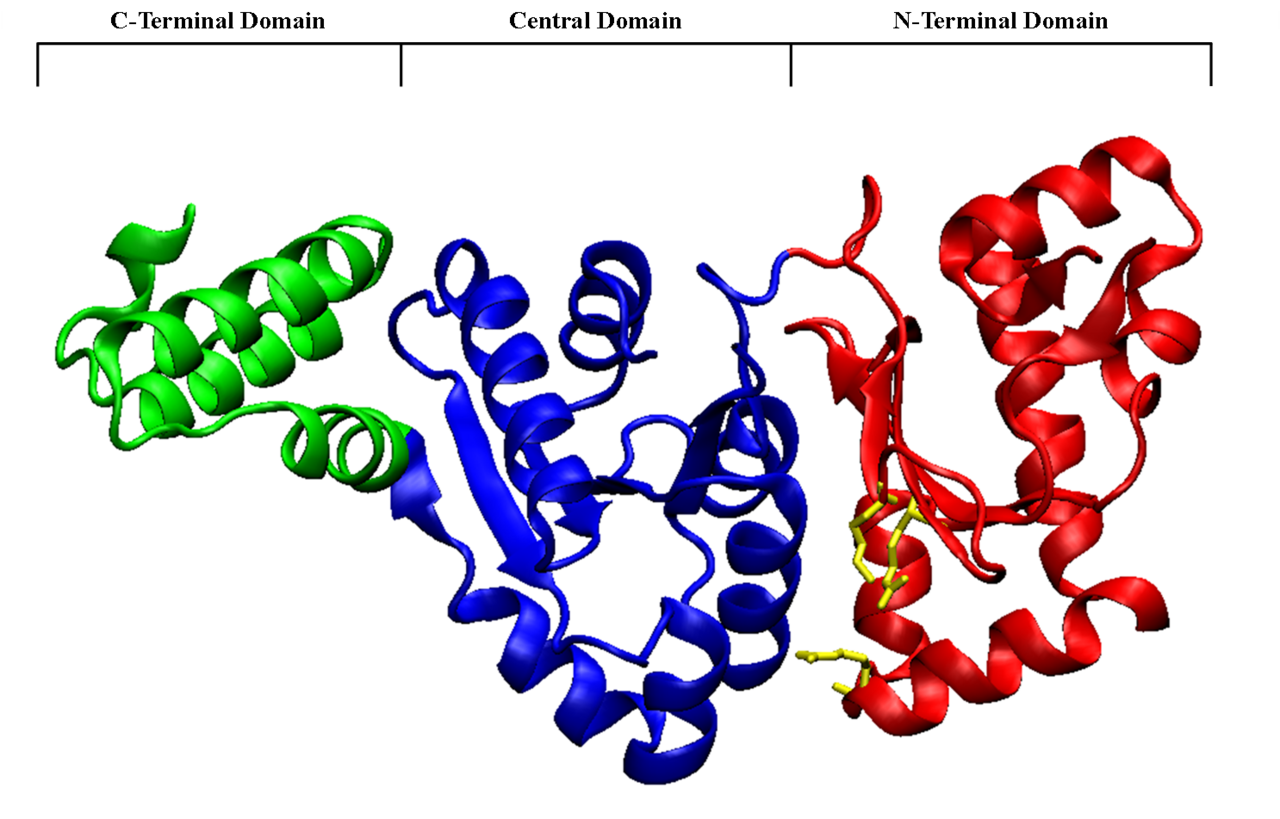
The journey of a single transcription event unfolds in a tightly choreographed sequence. In bacteria, the sigma factor first recognizes conserved promoter elements—the so-called −35 and −10 sequences—positioned upstream of the gene to be copied. At certain promoters, the C-terminal domain of the alpha subunit also engages additional upstream DNA elements. Once the enzyme latches on, it transitions from a closed complex to an open complex, a conformational shift that separates the two DNA strands and exposes the template. RNA polymerase performs this unwinding on its own, incorporating helicase activity directly into its structure, so no separate unwinding enzyme is required. Elongation then proceeds as the enzyme guides incoming nucleotides into position, catalyzes their attachment, and extends the growing RNA chain. In eukaryotes, these chains can stretch to an astonishing 2.4 million nucleotides, as seen with the dystrophin gene. The enzyme also carries built-in proofreading and replacement functions, correcting mismatches as it goes. Finally, it recognizes terminator sequences at the end of genes and releases the completed transcript.
A Toolkit of RNA Products
One of RNA polymerase's most remarkable capabilities is the breadth of RNA species it generates, each serving a fundamentally different purpose in the cell. Messenger RNA serves as the direct copy of a gene's coding strand and is later translated into a polypeptide chain at the ribosome. Transfer RNA acts as a molecular shuttle, delivering specific amino acids to the growing chain during translation. Ribosomal RNA becomes a structural and functional component of the ribosome itself. Micro RNA operates at a regulatory level, fine-tuning gene activity. Catalytic RNA, or ribozymes, functions as an enzymatically active molecule in its own right. Beyond these well-known classes, the discovery of RNA silencing mechanisms and a wave of new non-coding RNA genes identified since the late 1990s has revealed that RNA's roles in the cell are far more extensive than once appreciated. In bacteria and archaea, a single RNA polymerase species handles all of these outputs. In eukaryotes, the task is divided among multiple specialized nuclear polymerases, each dedicated to a distinct subset of RNA products.
Evolutionary Lineages and Regulatory Complexity
RNA polymerase is found in every living organism and in many viruses, yet it has evolved along two fundamentally independent lineages. The multi-subunit form, shared by bacteria, archaea, and eukaryotes, retains a recognizable core structure and mechanism across all three domains of life. The single-subunit form, encountered in bacteriophage viruses and in the chloroplasts and mitochondria of eukaryotic cells, is evolutionarily related to modern DNA polymerases rather than to the multi-subunit enzyme. Bacteria and archaea each rely on a single RNA polymerase to transcribe every type of RNA, while eukaryotes deploy several distinct nuclear polymerases, each with a specialized RNA portfolio. Regulation of the enzyme is extraordinarily intricate. In E. coli alone, more than one hundred transcription factors have been identified that modulate its activity, and multiple interchangeable sigma factors—such as σ70 for housekeeping genes and σ32 for heat-shock responses—allow the cell to switch transcriptional programs in response to environmental cues. In 2006, Roger D. Kornberg received the Nobel Prize in Chemistry for producing detailed molecular images of RNA polymerase at various stages of transcription, cementing our structural understanding of this universal enzyme.
Gallery
Frequently Asked Questions
Who is RNA polymerase?
RNA polymerase is an enzyme—sometimes assembled from multiple subunits, sometimes a single polypeptide—that reads a DNA template strand and builds a complementary RNA molecule. In the literature it also goes by RNAP, RNApol, or DNA-directed RNA polymerase (DdRP).
What are RNA polymerase's powers or role?
Its core ability is transcription: it tracks along a DNA strand and stitches together a new RNA chain nucleotide by nucleotide. In doing so it produces the full cast of RNA species—messenger RNA, transfer RNA, ribosomal RNA, microRNA, and catalytic RNAs.
How does RNA polymerase's story end?
Once it encounters a termination signal in the template DNA, the enzyme releases both the finished RNA transcript and the template strand, concluding its pass. The newly made RNA then moves on to be processed, translated, or folded into its functional shape.
Why is RNA polymerase important?
Without it, no cell could convert the genetic instructions stored in DNA into the RNA intermediates that drive protein synthesis and gene regulation. It is therefore found in every living organism and in many viruses, making it one of the most universally essential enzymes in biology.
Where does RNA polymerase sit in the molecular-biology canon?
It occupies the pivotal step of the central-dogma pathway, bridging the DNA genome and the RNA intermediates cells use every day. In the Cellular and Molecular Biology 25-36 module it is the central figure around which the entire transcription storyline is built.
More in Cellular And Molecular Biology 25-36
Elsewhere in the Cellular And Molecular Biology universe
Spotted an error? Know more?
This is a living reference — every entry is fact-audited, and reader corrections feed straight into our audit queue. Suggest an edit · See this site's audit record