
RNA interference
RNAi is a gene-silencing process using double-stranded RNA.

Lonugget · CC BY-SA 3.0
RNA interference (RNAi) is a biological process in which RNA molecules suppress gene expression in a sequence-specific manner through double-stranded RNA, via translational or transcriptional repression. It is a naturally occurring pathway found in many eukaryotes, playing roles in defending cells against parasitic nucleotide sequences and influencing organism development. The process is central to gene regulation and has become a valuable research tool and a potential basis for therapeutics.
- field
- Molecular biology, genetics
- known_for
- Discovery of RNA interference (RNAi) mechanism
- key_components
- Dicer, Argonaute 2, RISC, siRNA, miRNA
Lore & Background
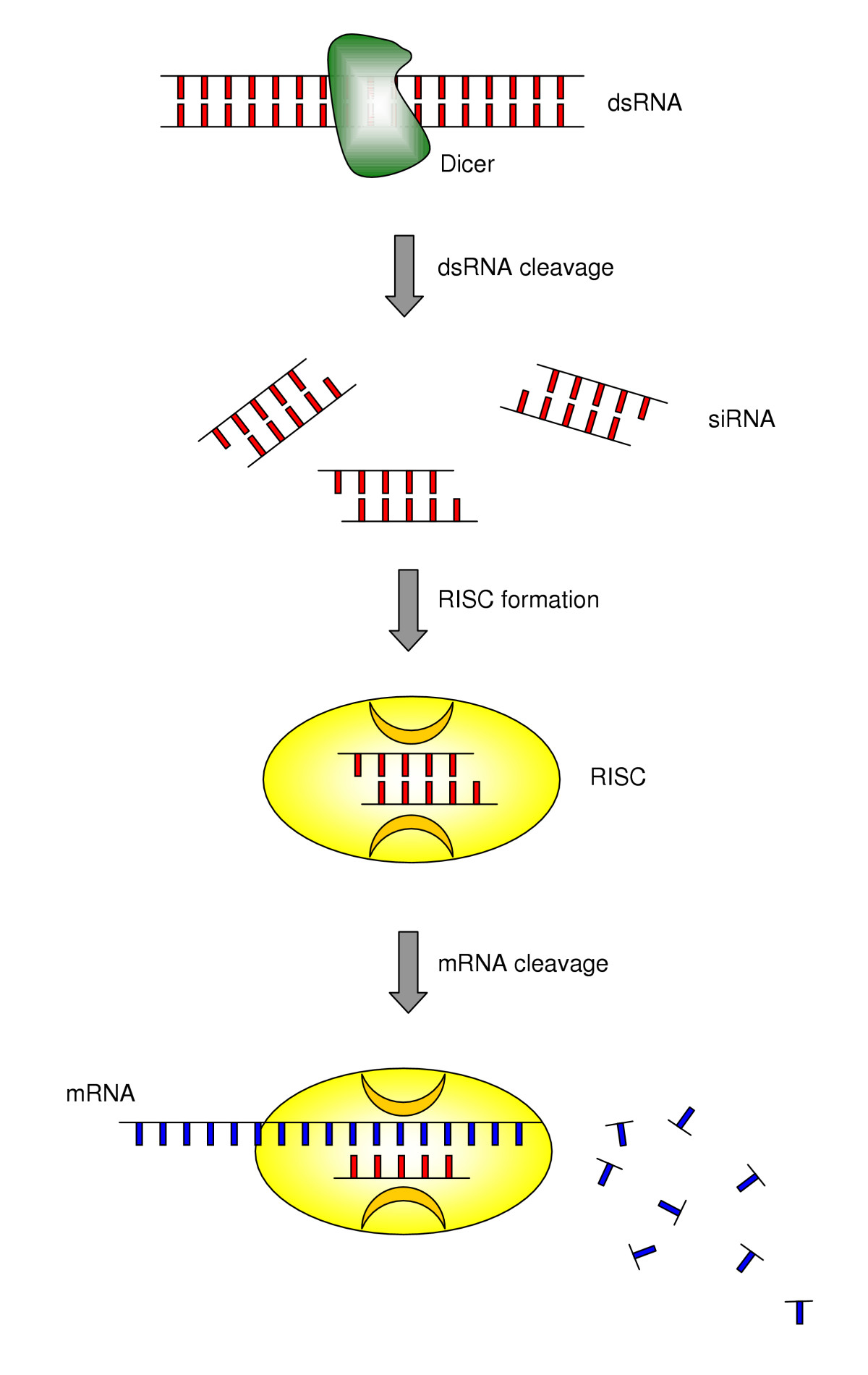
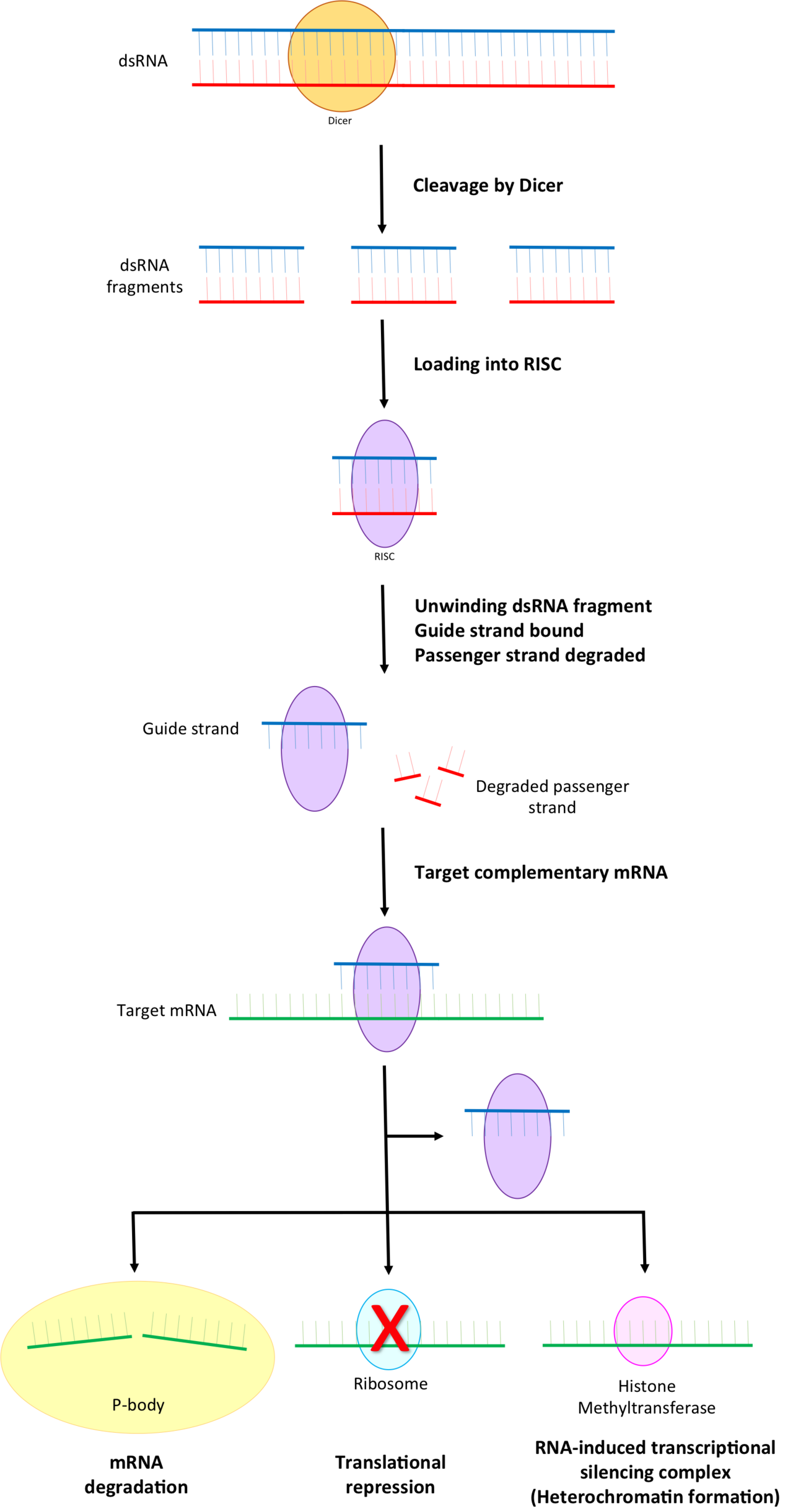
RNA interference was historically known by other names, including co-suppression, post-transcriptional gene silencing (PTGS), and quelling. Detailed study of these seemingly different processes revealed they were all actually RNAi. The pathway is initiated by the enzyme Dicer, which cleaves long double-stranded RNA molecules into short fragments of approximately 21 to 23 nucleotides, called siRNAs. Each siRNA is unwound into two single strands; the passenger strand is cleaved by Argonaute 2 and degraded, while the guide strand is incorporated into the RNA-induced silencing complex (RISC). The RISC then binds and degrades target mRNA.
Reader's Guide
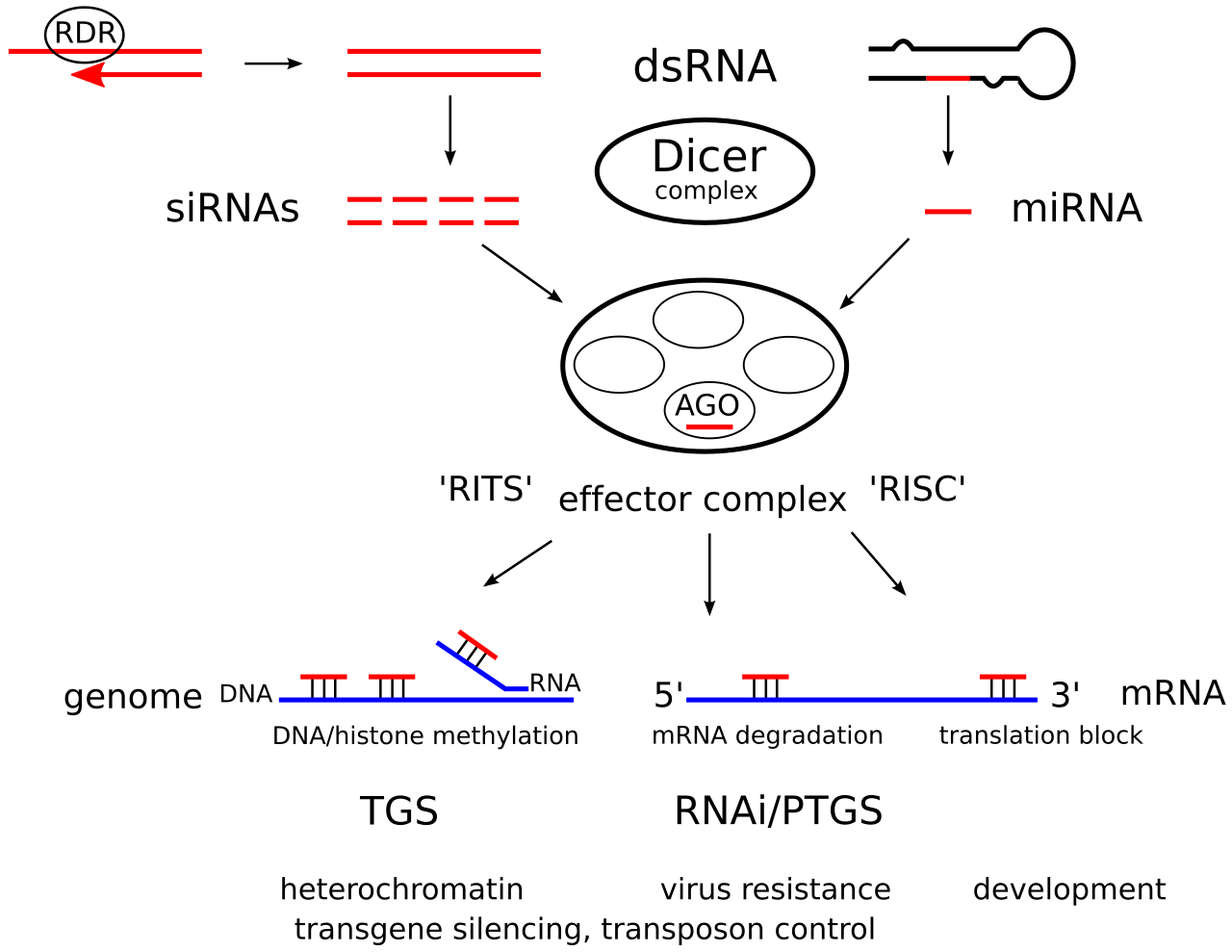
RNA interference has immense potential in suppression of desired genes and is considered precise, efficient, stable, and better than antisense therapy for gene suppression. It is a valuable research tool in cell culture and living organisms, as synthetic dsRNA can selectively induce suppression of specific genes. RNAi may be used for large-scale screens that systematically shut down each gene in the cell, helping identify components necessary for cellular processes. The pathway also has practical applications in food, medicine, and insecticides. Two types of small RNA molecules, microRNA (miRNA) and small interfering RNA (siRNA), are central to the RNAi pathway. miRNAs are genomically encoded and help regulate gene expression, particularly during development, while siRNAs are derived from exogenous or endogenous dsRNA. The discovery of RNAi has provided a mechanism for post-transcriptional and transcriptional gene silencing, with roles in defending cells against viruses and transposons.
Did You Know?
- RNAi was historically known as co-suppression, post-transcriptional gene silencing (PTGS), and quelling.
- The enzyme Dicer cleaves long double-stranded RNA into fragments of approximately 21 to 23 nucleotides.
- MicroRNAs (miRNAs) are genomically encoded and help regulate gene expression, particularly during development.
From Quelling to Nobel Glory
RNAi's journey to recognition was anything but straightforward. For years, researchers in different labs encountered what appeared to be entirely separate phenomena: co-suppression in plants, post-transcriptional gene silencing, and quelling. Each group described a process in which gene expression was suppressed in a sequence-specific manner, yet they treated their observations as distinct puzzles. It was only through the careful, detailed study of each pathway that scientists realized they had all been observing the same underlying mechanism. The breakthrough that crystallized this understanding came from Andrew Fire and Craig Mello, who in 1998 published their landmark work demonstrating RNAi in the nematode worm Caenorhabditis elegans. Their elegant experiments showed that introducing double-stranded RNA could selectively silence specific genes, confirming the universality of the process. For this achievement, Fire and Mello were awarded the 2006 Nobel Prize in Physiology or Medicine, cementing RNAi's place among the most consequential discoveries in modern molecular biology.
The Dicer-to-RISC Assembly Line
The RNAi pathway operates as a remarkably precise molecular assembly line. It begins when the enzyme Dicer encounters long double-stranded RNA in the cytoplasm and cleaves it into short fragments of roughly 21 to 23 nucleotides, each bearing a two-nucleotide overhang at the 3′ end. Bioinformatics analyses across multiple genomes suggest this specific length was evolutionarily optimized to maximize target specificity while minimizing off-target effects. Each resulting siRNA duplex is then unwound into two single strands: a passenger (sense) strand and a guide (antisense) strand. The selection between them is strictly asymmetric. The MID domain of Argonaute 2 recognizes the thermodynamically stable end of the duplex, ejecting the passenger strand whose 5′ end is discarded, while the guide strand is retained. The passenger is subsequently degraded, and the guide is loaded into the RNA-induced silencing complex. Once assembled, RISC uses the guide strand to locate a complementary sequence in a target mRNA, where Ago2 acts as the catalytic blade, cleaving the transcript and preventing it from serving as a translation template.
Two Small RNAs, Two Strategies
Although both microRNA and small interfering RNA feed into the same RISC machinery, they pursue fundamentally different silencing strategies. siRNA, whether generated from exogenous double-stranded RNA introduced during viral infection or laboratory manipulation, or from endogenous sources, typically achieves its effect through destructive cleavage. The guide strand pairs with a complementary sequence in the target mRNA, and Ago2 cuts the transcript, eliminating it before it can be translated. MicroRNA takes a subtler approach. miRNAs are genomically encoded non-coding RNAs whose primary transcripts are first processed into characteristic stem-loop structures in the nucleus before being exported to the cytoplasm. Rather than seeking perfect complementarity, miRNA-loaded RISC complexes scan cytoplasmic mRNAs for partial matches, typically in the 3′ untranslated region. This imperfect binding does not trigger cleavage; instead, it blocks ribosome access, effectively throttling translation without destroying the message. Both pathways converge at RISC, yet their distinct binding logic allows cells to fine-tune gene expression across a spectrum from complete shutdown to partial dampening.
From Petri Dish to the Field
Beyond its role as a natural cellular defense mechanism against parasitic nucleotide sequences such as viruses and transposons, RNAi has become an indispensable tool across research and industry. In cell culture and living organisms, synthetic double-stranded RNA can be introduced to selectively and robustly suppress genes of interest, making it a superior alternative to antisense therapy in terms of precision, efficiency, and stability. Researchers exploit this capability for large-scale genetic screens, systematically shutting down each gene and its encoded protein to map the components required for processes like cell division. The pathway's practical reach extends well beyond the laboratory. RNAi-based approaches are now being developed for applications in food production, medicine, and insecticide design. In C. elegans, the initial silencing signal is even amplified through the synthesis of secondary siRNAs via an RNA-dependent RNA polymerase, and in some organisms the effect spreads systemically despite the initially low molar concentrations of the triggering siRNA. This combination of natural elegance and practical versatility makes RNAi one of the most adaptable tools in modern biology.
Gallery
Frequently Asked Questions
Who is RNA interference?
RNA interference is a naturally occurring gene-silencing mechanism present in most eukaryotic cells, in which small RNA molecules direct the suppression of specific gene expression. It operates through both translational and transcriptional repression pathways.
What are RNA interference's powers/role?
RNAi harnesses double-stranded RNA triggers to guide the RISC complex—built around Dicer and Argonaute 2 proteins—toward degrading target mRNA or blocking its translation. It also bolsters cellular defenses against parasitic genetic elements such as transposons and viral sequences.
How does RNA interference's story end?
The pathway resolves when the RISC complex, steered by its small interfering or micro RNA, either cleaves the matching mRNA strand or prevents it from being translated into protein. The targeted gene is thus silenced without any permanent change to the underlying DNA.
Why is RNA interference important?
It constitutes a fundamental regulatory layer in eukaryotes, shaping development and providing an immune-like shield against foreign nucleic acids. Beyond its natural role, RNAi has become an indispensable laboratory tool and a promising foundation for therapeutic interventions.
More in Cellular And Molecular Biology 25-36
Elsewhere in the Cellular And Molecular Biology universe
Spotted an error? Know more?
This is a living reference — every entry is fact-audited, and reader corrections feed straight into our audit queue. Suggest an edit · See this site's audit record